Your shoulder complains at the bottom of a press. A few warm-up sets help, so you finish the session. Later, reaching into a cupboard hurts.
The warm-up gave you useful information. So did the evening afterwards. Decisions about your next session need both.
Which symptoms need prompt care?
Get assessed promptly if pain followed a fall, dislocation or sudden injury and you now struggle to raise the arm. A visibly changed shoulder shape, marked new weakness, persistent numbness or loss of movement also needs review.
A hot or swollen shoulder with fever or feeling unwell needs urgent medical care. [3]
What is sore?
The rotator cuff is a group of muscles and tendons which helps control the shoulder. Rotator cuff-related pain is one possible explanation for symptoms during lifting. An assessment also considers the joint, neck, previous injuries and other causes. [1]
A pressing movement does not identify the painful tissue on its own. Nor does a single strength test. The pattern across your history and examination matters.
It is also worth reviewing the whole training week. Did you add pressing sessions, increase both sets and resistance, or return after a break? Include work, sport and overhead tasks outside the gym.
Do you need a scan?
For suspected rotator cuff tendinopathy, the 2025 clinical guideline starts with history and examination. Routine imaging is not the first step for every shoulder. Injury-related weakness, concern about a significant tear or persistent symptoms despite appropriate care changes the decision. [1]
Shoulder scans also show findings in people without pain. In one study of 420 volunteers aged 50 to 79, full-thickness rotator cuff tears appeared in 2.1% of those aged 50 to 59, rising to 15% in those aged 70 to 79. [2]

Read the figure as text
| Age group | Prevalence in this study |
|---|---|
| 50–59 | 2.1% |
| 60–69 | 5.7% |
| 70–79 | 15% |
This does not make a tear unimportant. It means the report needs to fit the clinical picture before deciding what it means for you.
Change one part of the press
Education and an active rehabilitation programme are recommended for rotator cuff tendinopathy. For a lifter, the programme should address the movements they want to return to. [1]
These examples provide options for gradual-onset symptoms after assessment. They are not a plan for an unassessed traumatic injury.

| If this provokes symptoms | An option to compare |
|---|---|
| The bottom of a bench press | A shorter range, such as a floor press. |
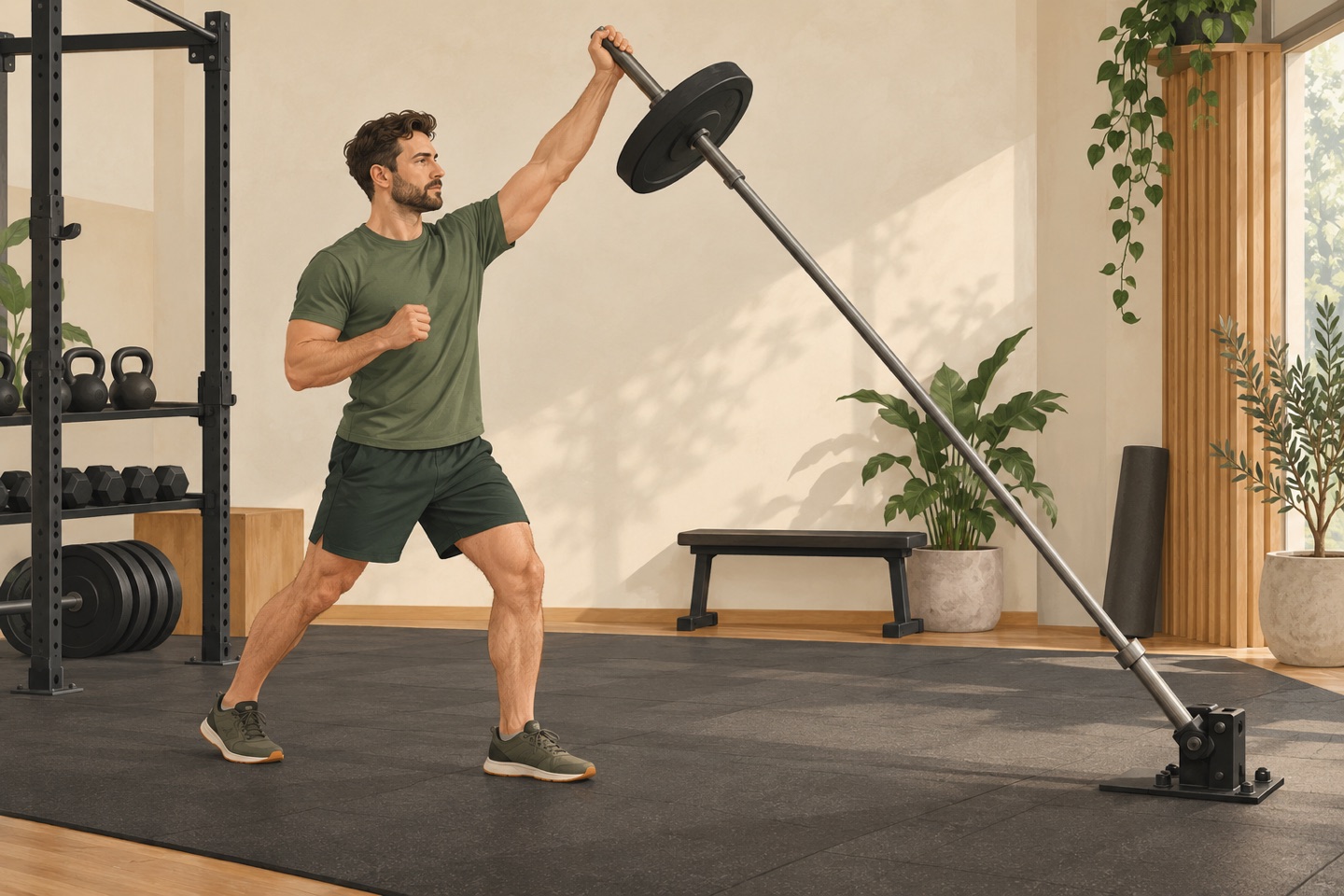
| A straight overhead press | An angled press, including a landmine variation. |
| A fixed barbell grip | Dumbbells with a different tolerated grip. |
| The final sets | Less total work rather than changing every exercise. |
Hold the other variables steady where practical. If you change the load, grip, angle and repetitions together, it is harder to identify which change helped.
Keep other training only if it suits your symptoms and diagnosis. Rows and pulling exercises are not automatically comfortable for every sore shoulder.
Review the whole response
During the session, notice whether symptoms build and whether you change the movement to finish. Later, consider ordinary tasks and sleep. The following day, compare movement and function with your usual baseline.
During
Is the movement controlled? Are symptoms stable or increasing?
Later
Do reaching, dressing or resting feel harder?
Next day
Has function returned towards baseline, or is the problem accumulating?
This is a practical monitoring framework. It does not replace the diagnosis or establish a universal safe pain score. New weakness, worsening symptoms or a persistent loss of function needs review.
What should rehabilitation restore?
A useful plan builds the movement, strength and repeated-session tolerance required for your actual training. Some people start with direct cuff exercises. Others tolerate modified pressing early. There is no rule requiring full range to return last.
Progress one or two variables at a time. Check whether you tolerate the new dose before making another large change. Add the specific demands of sport or work where they matter.
Resting from one painful exercise is a temporary adjustment. Returning straight to the previous dose without a rebuild leaves the original question unanswered.
If progress stalls, get the plan reviewed. You should leave an assessment knowing which movements to modify and what the next useful step looks like.
Read more about shoulder pain assessment in Richmond.
Shoulder pain limiting your training?
Book an assessment at Bridge Road Physiotherapy, inside Uplift Gym at 507 Bridge Road, Richmond. We’ll review the problem, your current activity and the next steps for your rehabilitation.
References and further reading
- Desmeules F, et al. Rotator cuff tendinopathy diagnosis, nonsurgical medical care, and rehabilitation: a clinical practice guideline. JOSPT. 2025;55:235–274. Read the source.
- Moosmayer S, Smith HJ, Tariq R, Larmo A. Prevalence and characteristics of asymptomatic tears of the rotator cuff: an ultrasonographic and clinical study. JBJS Br. 2009;91:196–200. Read the source.
- Healthdirect Australia. Shoulder pain. Read the source.
General education. An individual assessment is needed to diagnose your symptoms and choose appropriate care.